
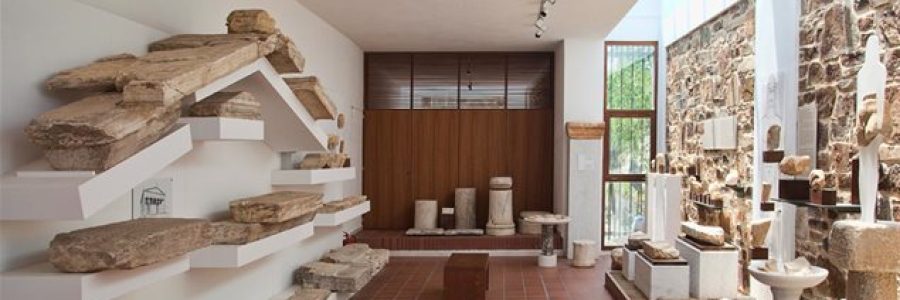
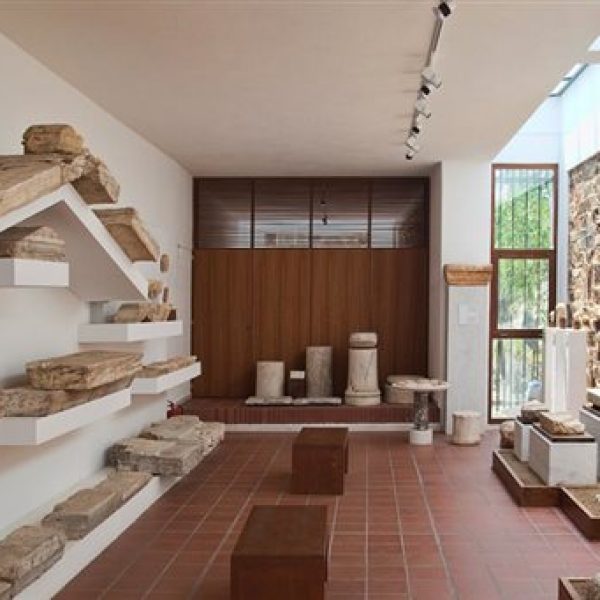
As I entered the Kastro of Naxos, besides the narrow alleyways and the silent Venetian walls, one destination in particular drew me in: the Archaeological Museum, housed for decades in a historic building overlooking the old town. The path there led me up narrow stone steps, past ancient archways and facades still bearing the coats of arms of Venetian noble families. Despite the late summer warmth, the air up here was pleasantly cool, and the quiet of the quarter lent my visit an almost solemn atmosphere.
From the outside, the museum itself appeared simple, almost unassuming. But as soon as I opened the heavy doors and stepped into the first exhibition room, I felt transported to another time. The scent of ancient walls, mingled with a faint hint of preserved artifacts, greeted me like a soft whisper from the past. The rooms were high and flooded with light, and the building’s ancient stone arches reminded me that architecture itself is part of history.
First, I explored the collection of Cycladic art for which Naxos is so famous. The Bronze Age marble figures—simple, stylized, yet full of expression—particularly captivated me. Each one seemed to tell its own story, even though they often consisted of only clean lines and simplified forms. I imagined people creating these figures more than four thousand years ago and felt an unexpected connection to them.
I continued through rooms displaying ceramics, tools, and jewelry from various periods. Some pieces were delicate and elegant, others robust and functional. I was especially impressed by a collection of finely painted vessels, their patterns still vibrant with life. I lingered before them, examining the details and trying to imagine the daily lives of the people who once used these objects.
Another room was dedicated to Roman and early Christian artifacts. Floor mosaics, funerary reliefs, and small everyday objects told the story of a Naxos that had experienced and absorbed many cultures over the centuries. The diversity of the exhibits allowed me to experience the island anew – not just as a holiday destination, but as a millennia-old cultural center in the heart of the Aegean Sea.
I was particularly moved by a small balcony of the museum that opened onto the old town. I stepped out and looked down at the sea of white houses stretching to the blue water. The contrast between the vibrant present outside and the silent, ancient artifacts inside made me feel the significance of this museum even more intensely. It was as if the building connected both eras.
As I finally left the museum and walked back through the narrow streets of the Kastro, I carried with me a feeling of deep connection to the island’s history. The visit had not only imparted knowledge, but also the quiet, almost meditative experience of being, for a moment, part of a much larger time period.
The Archaeological Museum of Naxos is not merely a place of exhibition – it is a window into the past that allows you to emerge quietly, thoughtfully, and enriched.
Map – Route