
Portara – Temple of Apollo, Naxos Town
What is the Portara and why is it famous?
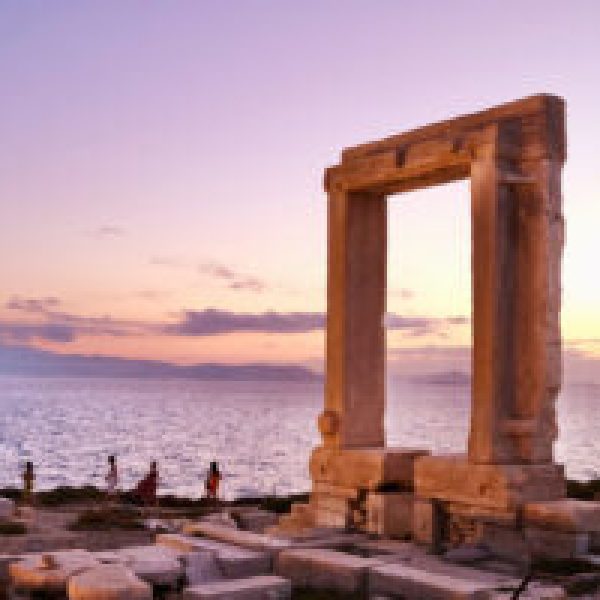
The Portara is the enormous doorway of a temple that was begun in the 6th century BC, most likely dedicated to Apollo or Dionysus, and never completed. Today, the giant marble frame stands alone on a small islet called Palatia, directly opposite the harbor of Naxos Town, connected to the mainland by a short stone causeway. Its sheer size and dramatic position above the Aegean Sea make it one of the most photographed sights in the Cyclades.
For visitors, the Portara combines several experiences in one: a glimpse into ancient Greek history, sweeping sea views, and a front‑row seat for unforgettable sunsets. Because it is so close to the port and old town, you can easily walk there from most hotels in Chora, even if you are only on the island for a short stay. The site is free to enter, open all day and especially magical during the golden hours of early morning and evening.
How to get to the Portara in Naxos Town
One of the best things about visiting the Portara is how simple it is to reach. If you are staying in Naxos Town, you can walk from the waterfront promenade to the beginning of the stone causeway in about 5–10 minutes. Just follow the harbor north, keeping the sea on your left and the old town alleys on your right, and you will clearly see the marble gate ahead of you.
From the main bus station in Naxos Town, the walk is similarly short. Buses from popular beach resorts such as Agios Prokopios, Agia Anna and Plaka terminate very close to the port, so it is easy to include a visit to the Portara after a day at the beach. If you are arriving by rental car, there are parking areas around the port and marina; from there, you continue on foot. Because the access path is exposed to the wind and waves, it is advisable to wear comfortable shoes rather than flip‑flops.
Best time to visit: sunrise or sunset?
The Portara is open all day, but timing your visit makes a big difference to the experience. For photographers and romantics, sunset is the classic choice. As the sun sinks behind the neighboring islands, the sky turns orange and pink, framing the marble doorway in dramatic silhouette. On clear evenings the light can be breathtaking, and you will be sharing the moment with people from all over the world.
However, sunrise has its own magic and usually far fewer people. In the early morning you may have the entire headland almost to yourself. Soft light brings out the texture of the marble and the views over Naxos Town are wonderfully peaceful. If you want to capture both the town and the gate in calm conditions, or if you prefer cooler temperatures in high summer, an early visit is highly recommended.
What to expect on site
Once you cross the short causeway, a gently ascending path leads you up the low rocky hill to the monument. The ground is uneven, with stones and low vegetation, so watch your step, especially if you are visiting at dusk or after dark. Around the Portara there are low ropes and informational signs explaining the history and archaeology of the temple. Please respect all barriers and avoid climbing on the monument or walking outside the marked paths, as this helps protect both visitors and the fragile ruins.
From the top you enjoy a 360‑degree panorama: to one side the white houses and Venetian Castle of Naxos Town, to another the open sea and nearby islands, and below you the waves breaking around the rocks. On windy days the Aegean can be quite dramatic, with spray reaching the causeway, so keep a safe distance from the edge if traveling with children.
Photography tips for the Portara
To capture the Portara at its best, consider these simple tips:
•Visit at golden hour (shortly after sunrise or before sunset) when the light is warm and low.
•For classic silhouettes, stand on the town side and photograph the gate against the sun.
•For a more detailed view of the marble and the surrounding landscape, walk around the monument and shoot with the light behind you.
•Include people in some of your compositions to show the impressive scale of the gate.
•If you are shooting with a phone, tap on the sky to expose for the sunset colors and let the Portara itself fall into shadow for a dramatic effect.
In summer, sunset can be busy, so arrive early if you want a particular vantage point. Walk around the entire islet first, then choose your favorite angle before the sun reaches the horizon.
Combining the Portara with a walk in Chora
A visit to the Portara fits perfectly into a broader sightseeing walk around Naxos Town. Many travelers like to start in the late afternoon with an exploration of the old alleys and the Venetian Castle district. From the Kastro, you can wander down through the maze of narrow streets lined with cafés, small shops and traditional houses until you reach the seafront promenade.
From there, continue north along the harbor to the Portara for sunset, then return to the old town for dinner in a taverna. This simple loop gives you a beautiful overview of Chora’s history, architecture and culinary scene without needing any transport. Families with children will appreciate that everything is close together and easy to walk.
Practical tips for visiting the Portara
To make the most of your visit, keep these practical points in mind:
•Footwear: Wear sturdy sandals or trainers; the path and rocks are uneven.
•Wind: It can be very windy, especially in July and August. Bring a light jacket and keep a firm grip on hats and sunglasses.
•Safety: Stay behind ropes and away from cliff edges. The rocks can be slippery after rain or strong waves.
•Time needed: Allow at least 30–45 minutes to walk there, explore, take photos and enjoy the views. For sunset, plan an hour or more.
•Accessibility: The uneven terrain means it is not ideal for wheelchairs or pushchairs, although the early part of the causeway is relatively flat.
Because the Portara is free and open, many visitors return more than once during their stay on Naxos – for example one morning visit for quiet photos and another evening for sunset.
Why the Portara belongs on every Naxos itinerary
The Portara is more than just a photogenic ruin. It is a place where the island’s mythological past, maritime landscape and modern life all meet in one compact spot. From here you look back at the bustling harbor and whitewashed houses, out toward distant islands, and inward to the long history that shaped Naxos.
For first‑time visitors, a walk to the Portara is often the very first thing they do after dropping their bags at the hotel. For returning guests, it becomes a ritual – a way to reconnect with the island at the beginning or end of each trip. Whether you are a history fan, a photographer or simply someone who loves beautiful views, the Portara deserves a special place on your personal list of the best things to do on Naxos.
Map – Route
Map – Route